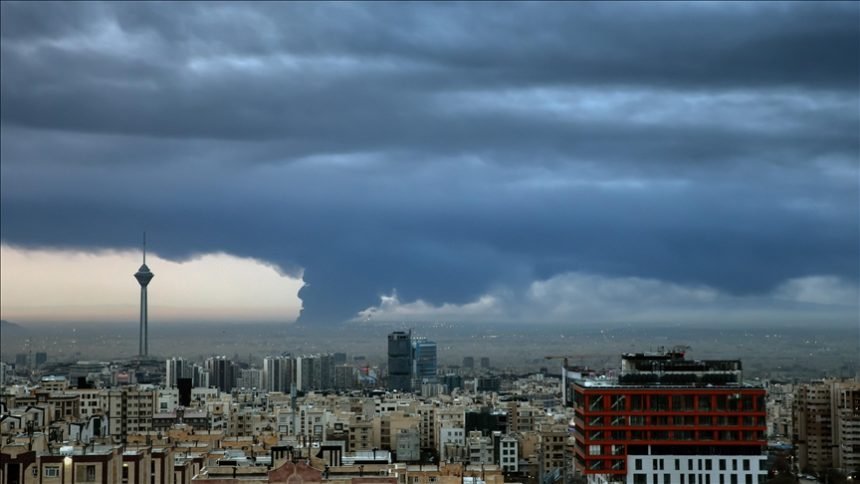
The U.S.–Israeli conflict with Iran entered its 13th day Thursday, with military operations expanding across multiple fronts in the Middle East and raising fears the fighting could evolve into a broader regional war.
U.S. and Israeli forces continued conducting intensive airstrikes inside Iran, while missile, drone and maritime attacks spread across Lebanon, Iraq and several Gulf states, alongside disruptions to oil shipping in the Strait of Hormuz.
The Israeli military said it launched a new wave of attacks targeting military and industrial facilities in and around Tehran.
Iranian media reported that drone strikes hit security installations in southern and northern Tehran, killing several members of the security forces and the Basij militia.
Other strikes targeted industrial areas in Robat Karim south of Tehran and the city of Kashan in Isfahan province.
The U.S. Central Command said more than 5,500 targets inside Iran had been destroyed since the beginning of operations, including sites linked to missile and drone capabilities.
The command also reported the destruction of a vessel belonging to Iran’s Revolutionary Guard.
Iranian media said the Revolutionary Guard launched missile strikes toward Israel, while Israeli media reported that about 150 rockets were fired from Lebanon within three hours.
Hezbollah said it carried out 38 military operations in a single day, launching dozens of rockets and drones at Israeli bases and positions.
The Israeli military said it intercepted several incoming projectiles.
At the same time, Israeli airstrikes on Lebanon intensified, particularly in Beirut’s southern suburbs and areas in southern Lebanon.
According to Lebanon’s Health Ministry, at least 26 people were killed in a series of strikes.
Lebanese Health Minister Rakan Nassereddine said the death toll since the latest escalation began has exceeded 630 people, including 91 children, with about 1,586 wounded.
Violence has also spread into Iraq, where security sources reported casualties after an airstrike targeted a headquarters of the Iran-aligned Popular Mobilization Forces in Al-Qaim near the Syrian border.
Two militia members were also killed in a separate strike in Kirkuk.
Meanwhile, the city of Erbil in Iraq’s Kurdistan Region came under overnight drone attacks.
The regional governor said 17 drones targeted the city but were intercepted without casualties, with coalition air defenses assisting in the interceptions.
The U.S. embassy in Baghdad warned of possible attacks on locations frequented by Americans across Iraq.
Missile and drone attacks have also targeted several Gulf countries.
The United Arab Emirates, Saudi Arabia and Kuwait reported intercepting multiple missiles and drones launched from Iran.
The UAE said its air defenses have intercepted 268 ballistic missiles and 1,514 drones since the war began.
In Kuwait, two people were injured after a drone struck a residential building.
Saudi Arabia said it intercepted drones heading toward Prince Sultan Air Base and the Shaybah oil field, while Bahrain reported a fire at fuel storage tanks in Muharraq following a drone attack.
In Oman, drones struck fuel storage facilities at the port of Salalah.
Diplomatic activity has intensified alongside the military escalation.
The UN Security Council adopted a resolution calling for an immediate halt to Iranian attacks on several countries in the region, with 13 members voting in favor while Russia and China abstained.
Arab states welcomed the move as a step toward protecting regional security and sovereignty.
Meanwhile, a Russian draft resolution calling for broader de-escalation in the Middle East failed to secure enough votes.
The conflict has also expanded to maritime routes in the Gulf, raising concerns about global energy supplies.