
LGBTQ+ rights are human rights: Why Ghana’s Bill is on wrong side of constitutionalism, human rights, history
The passage by Ghana's Parliament of the Human Sexual Rights and Family Values Bill for a second time has reignited one of the most important human rights debates in the country's constitutional history.
While supporters present the bill as a defence of culture, religion and family values, a closer examination of constitutional law, international human rights standards, history, religion and science reveals that the proposed law is difficult to justify in a democratic society founded on human dignity and fundamental rights.
The modern international human rights system has increasingly recognised that LGBTQ+ rights are human rights.
The principle is rooted in the foundational idea that all persons are born free and equal in dignity and rights, as proclaimed in the Universal Declaration of Human Rights.
The United Nations Human Rights Committee, which interprets the International Covenant on Civil and Political Rights, has repeatedly held that discrimination based on sexual orientation violates international human rights law.
Similarly, the African human rights system has evolved towards protecting sexual minorities.
The African Commission on Human and Peoples’ Rights adopted Resolution 275, condemning violence based on sexual orientation and gender identity.
The trend within international human rights law is unmistakably towards inclusion rather than criminalisation.
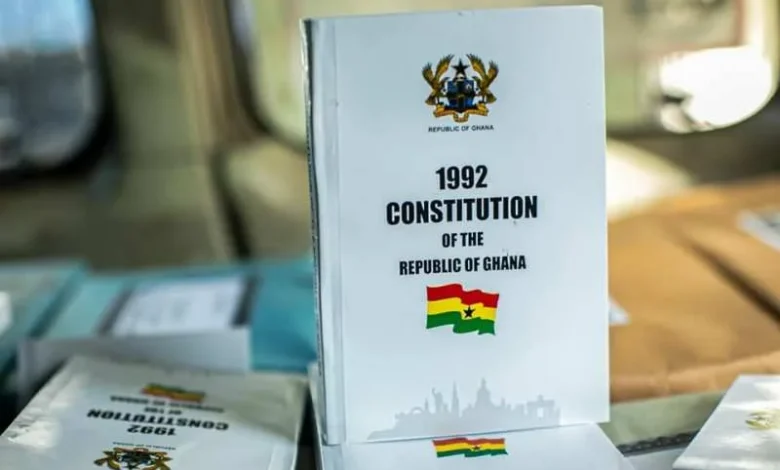
The Ghanaian Constitution provides strong grounds for protecting LGBTQ+ persons.
Article 15 guarantees the dignity of all persons. Article 17 guarantees equality before the law and prohibits discrimination.
Article 21 protects freedom of expression, association and assembly.
These rights belong to all persons, not merely to those whose identities or beliefs are approved by the majority.
Supporters of the bill often invoke “family values” and “African culture.” Yet history offers a more complex picture.
Anthropologists and historians have documented same-sex relationships and diverse sexual practices across numerous African societies long before colonialism.
The claim that homosexuality is a foreign import is difficult to sustain historically.
Indeed, many scholars argue that it was colonial criminal laws—not homosexuality—that were imported into Africa.
Several anti-sodomy laws currently found across the continent originated from nineteenth-century British colonial legislation.
Thus, paradoxically, some of the laws used to suppress homosexuality may be less indigenous than the conduct they seek to criminalise.
In Ghana itself, oral traditions and anthropological studies indicate that diverse forms of sexuality existed before the modern era.
They may not have been labelled “LGBTQ+” in contemporary terms, but human diversity did not suddenly appear in the twentieth century.
The religious argument against LGBTQ+ rights also deserves careful examination.
Many Christians sincerely believe homosexuality is sinful.
Even if one accepts that proposition, however, criminalisation does not automatically follow.
Christianity is founded upon compassion, mercy and redemption.
Jesus Christ was repeatedly associated with those whom society regarded as sinners. His ministry was characterised not by criminal punishment but by love and inclusion.
Moreover, Christianity itself is far from unanimous on the issue.
The Church of England permits blessings for same-sex couples and has increasingly embraced LGBTQ+ inclusion.
The Catholic Church, under the leadership of Pope Francis, has consistently emphasised respect and dignity for gay persons.
Pope Francis famously asked, “Who am I to judge?” when discussing homosexual individuals seeking God.
Importantly for Ghana, the distinguished Ghanaian Cardinal, Peter Kodwo Appiah Turkson, stated in a BBC interview that homosexuality should not be treated as a criminal offence.
His intervention reflected a distinction between theological belief and criminal law.
Science also challenges simplistic assumptions about sexual orientation.
Decades of scientific evidence suggest that sexual orientation is not a voluntary lifestyle choice. Biological, genetic, hormonal and developmental factors contribute to sexual orientation.
Major medical and psychological organisations worldwide have concluded that homosexuality is a normal variation of human sexuality and not a disease.