Iran and Israel exchange strikes after Beirut attack
A statement from Khatam al-Anbiya headquarters said Israel had crossed “all red lines” by ...
Iran and Israel exchanged missile and air strikes on Monday after Israeli attacks on Lebanon pushed the region closer to a wider conflict.
The latest escalation began after Israeli strikes hit Beirut’s southern suburbs on Sunday, killing at least two people and injuring others, according to Lebanese authorities.
Israel claims the operation targeted Hezbollah infrastructure and a command centre.
Tehran described the attack as a breach of understandings linked to the April ceasefire and warned of a response.
Late on Sunday, Iran launched missiles towards Israel.
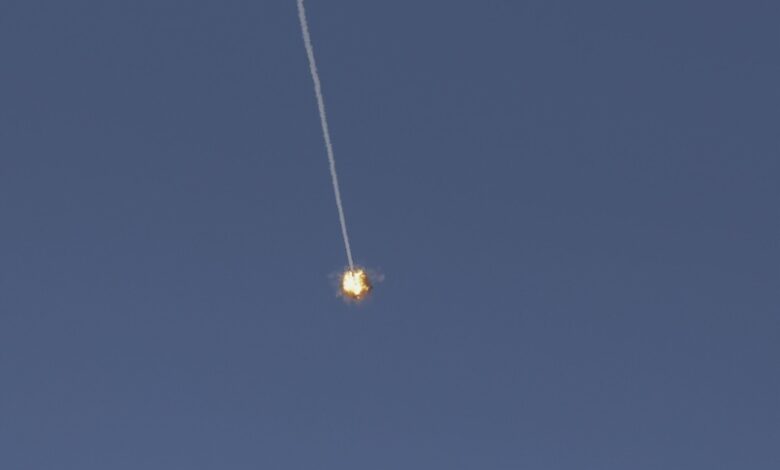
The Israeli military said sirens sounded across several areas and air defence systems intercepted incoming projectiles.
Israeli emergency services reported no immediate casualties.
Iran’s Islamic Revolutionary Guard Corps said the strikes targeted military facilities, including the Ramat David, Nevatim and Tel Nof air bases.
The force described the operation as a warning and said further attacks would follow if Israel expanded military action in Lebanon or Iran.
Iranian military officials linked the missile launches directly to events in Lebanon.
A statement from Khatam al-Anbiya headquarters said Israel had crossed “all red lines” by continuing attacks in Beirut’s southern districts despite diplomatic efforts aimed at reducing hostilities.
Within hours, Israel carried out air strikes inside Iran. Explosions were reported in Tehran, Isfahan, Tabriz and other locations.
The Israeli military said fighter jets struck military targets and strategic defence systems in western and central Iran.
Iranian media reported attacks on radar installations and military facilities, while officials said no casualties were immediately confirmed at several sites.
One of the most significant targets was the Karun Petrochemical Company in Mahshahr in Iran’s Khuzestan province.
Israeli officials confirmed the strike.
Iranian authorities said part of the facility was damaged and workers were evacuated while assessments continued.
The Revolutionary Guards later said they responded by launching missiles at a petrochemical facility in Haifa, warning that attacks on energy infrastructure could threaten supplies across the region and affect the global economy.
The exchange marked the first direct military confrontation between Israel and Iran since the ceasefire reached in April.
Several rounds of Iranian missile launches followed through Monday morning.
The Israeli military reported at least six separate salvos and said defensive systems remained active.
Debris from intercepted missiles landed in parts of the occupied West Bank and around Jerusalem.
Israeli authorities said there were no reports of deaths from the attacks.
The renewed fighting unfolded despite attempts by US President Donald Trump to prevent escalation.
Speaking to Israeli media, Trump said he intended to call Israeli Prime Minister Benjamin Netanyahu and urge him not to retaliate against Iran.
“The Iranian strikes didn’t hurt anybody.
Hopefully, Israel is not going to retaliate,” Trump said, according to reports.
He added that Washington remained close to reaching an agreement with Tehran and warned that further military action could derail negotiations.
The Financial Times first reported Trump’s remarks that Netanyahu would have “no choice” but to accept a US-negotiated agreement with Iran.
Axios separately reported that Trump urged restraint during direct conversations with Israeli leaders.
Iran rejected suggestions that Israeli actions were independent of Washington.
Foreign ministry spokesman Esmail Baghaei said the United States bore responsibility for ceasefire violations because Israeli military operations could not be separated from American policy.
“The United States bears responsibility for the Israeli regime’s aggression,” Baghaei said during a press conference in Tehran.
Diplomatic activity intensified across the region.
Qatar confirmed discussions with Iranian Foreign Minister Abbas Araghchi regarding mediation efforts and developments in Lebanon.
Saudi Arabia and Qatar also held talks on regional security.
European Union foreign policy chief Kaja Kallas called for negotiations and warned against another cycle of conflict.
The crisis widened as Yemen’s Houthi movement announced it had launched a missile towards Israel and declared Israeli-linked shipping in the Red Sea a military target.
The group said Israeli vessels would face a complete ban from the waterway and warned that further escalation would trigger additional action.
The announcement renewed concerns over maritime trade routes through the Red Sea and Bab al-Mandab Strait.
Air travel across parts of the region was disrupted.
Iran suspended flights at airports in Tehran, Kermanshah and Shiraz, while authorities monitored airspace following Israeli strikes.
Jordan issued alerts after reports of missiles passing through its airspace, and Saudi Arabia briefly activated warning systems in Al-Kharj before declaring the threat had passed.
Financial markets reacted quickly.
Brent crude oil rose above $96 a barrel as traders assessed the possibility of disruption to energy exports and shipping routes.
Analysts focused on the risk of attacks involving facilities connected to oil and petrochemical production across the Gulf region.
Inside Israel, hospitals moved patients into protected facilities and authorities prepared reserve mobilisations.
Israeli Army Radio reported that military planners expected the confrontation with Iran to continue for several days. Security cabinet meetings were scheduled as officials assessed military and diplomatic options.
In Lebanon, the latest developments reinforced fears that the country could again become a central battleground.
Iranian officials repeatedly stated that any settlement with the United States must include an end to attacks in Lebanon.
Tehran portrayed its missile launches as a signal that military action against Beirut would trigger consequences beyond Lebanon’s borders.