
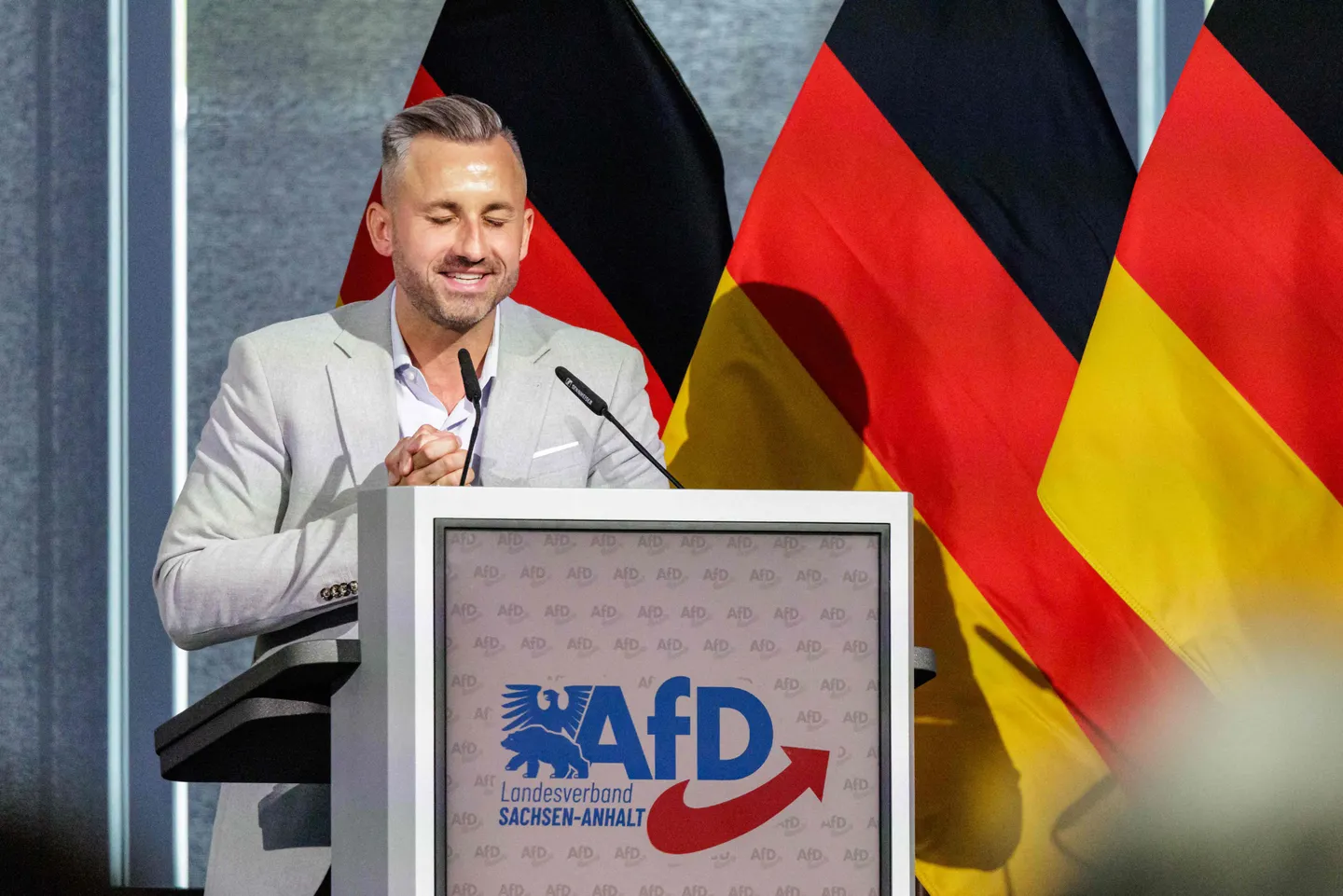
European politicians are expressing their worries over the impact of the victory of far-right party Alternative for Germany in the Saxony-Anhalt state election on Sunday.
European politicians are voicing concern over the far-right Alternative for Germany (AfD)’s historic victory in the German state of Saxony-Anhalt, warning that the result could have implications beyond Germany and reflects the growing strength of populist and far-right forces across Europe.
The AfD WON 43.8 percent of the vote and 39 of the 83 seats in Sunday’s election, more than doubling its previous result and finishing far ahead of Chancellor Friedrich Merz’s Christian Democratic Union (CDU), which received 17.2 percent.
The AfD fell just short of an outright majority, but its result marks its strongest-ever performance in a German regional election.
The AfD is already Germany’s most popular party at the national level and is seeking to secure a foothold for advancing its agenda, which includes heavy restrictions on immigration, restoring ties with Russia, cutting support to Ukraine and quitting the euro.
Germany’s mainstream parties have all refused to work with the AfD, which has been classified as right-wing extremist by the local office of Germany’s domestic intelligence service.
In France, Finance Minister Roland Lescure described the result as a “very, very worrying signal,” linking it to the broader rise of populism internationally.
“It clearly sends out a very, very worrying signal,” French Finance Minister Roland Lescure told RTL radio.
European Affairs Minister Benjamin Haddad called the outcome a “serious moment” for Europe and said mainstream politicians must respond to voters’ concerns without turning to nationalism or xenophobia.
In Poland, Prime Minister Donald Tusk reacted even more sharply, saying that “only idiots or traitors” could rejoice at the AfD’s triumph. His comments were directed in particular at members of Poland’s opposition who had welcomed the German party’s result.
There have also been warnings from Czechia. Opposition politician Vít Rakusan expressed concern about the AfD’s success, arguing that democratic parties need to address social and economic concerns more effectively if they are to prevent “populist forces” from gaining further ground.
“The victory of the AfD in Saxony-Anhalt shows how dangerous it is when democrats leave such weighty issues as migration and other burning social issues to the populists,” Rakusan said.
This would be the first time a far-right party has been within reach of power at the state level since World War II.
Whether or not AfD ends up governing, the result is a blow to Merz, whose center-right party has led Saxony-Anhalt for 24 years.