Easter goes developmental – Religion takes back seat as tourism, community promotion, brands take over
What was once a sacred three-day period for solemn reflection on the death and resurrection of Jesus Christ metamorphosed into Ghana’s biggest domestic tourism extravaganza over the weekend, with brands elbowing their way into church-dominated spaces to turn the holiest season on the Christian calendar into a marketer’s paradise.
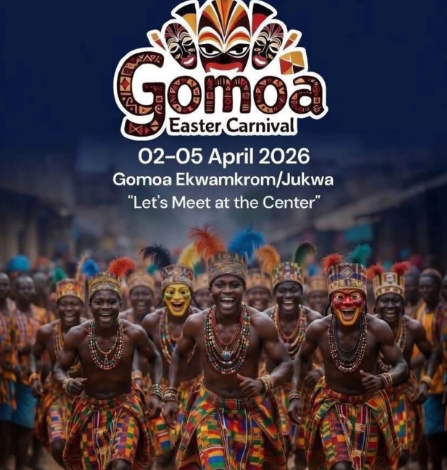
From the paragliding enthusiasts who soared off the Odweanoma Mountain in Kwahu in the Eastern Region to the canoe racers who battled the tides at Vodza, near Keta, in the Volta Region, and the debutant Gomoa Easter Festival with its star-studded lineup, this year’s Easter celebration completed a dramatic pivot from the pews to party grounds.
The Ghana Tourism Authority (GTA) did not just watch from the sidelines; it actively drove the transformation.
Under the auspices of the Black Star Experience initiative, the authority curated a calendar of events spanning culture, adventure and community celebrations across three major hubs, namely Kwahu, Keta and Gomoa.
“We leveraged the Black Star Experience to connect major cultural, adventure and community-driven events across the country in order to encourage Ghanaians to travel, explore and support local tourism destinations,” a Deputy Chief Executive Officer of GTA, Ben Anane Nsiah, stated during the launch of the Vodza Easter Regatta.
At the 18th Kwahu Easter and Paragliding Festival alone, the GTA recorded 31 flights on the first day, with two youngsters aged eight and 13 also courageously taking to the skies from the peak of the Odweanoma mountain at Atibie.
The authority expected more than 11,000 tourists to participate in this year’s event.
The Kwahu Business Forum
Amidst the festivities, a significant initiative sought to anchor the Easter celebration to a more enduring community and national development and economic transformation.
The third edition of the Kwahu Business Forum, spearheaded by the Chief of Staff, Julius Debrah, took place at the Kwahu Convention Centre in Mpraeso, drawing over 1,000 participants, including entrepreneurs, investors, policymakers and industry leaders.
Delivering the convener’s address, Mr Debrah declared that the forum had evolved beyond mere dialogue into a platform for tangible economic action.
“This forum is not about talk; it is about action.
It is where policy meets practice, where capital meets creativity, and where ambition meets execution,” he stated.
He issued a stark warning against Ghana’s continued reliance on raw material exports, urging a decisive shift toward industrialisation.
“Ghana must produce more of what it consumes, process more of what it grows, and build industries that compete beyond our borders,” Mr Debrah said.
He further urged established business leaders to mentor young entrepreneurs, describing mentorship as essential for sustaining economic growth.
“Those who have built must help others (to) build.
That is how nations create continuity and shared prosperity,” the Chief of Staff said.
Vision for Kwahu
President John Dramani Mahama, who attended the forum, disclosed that the idea for the Kwahu Business Forum was conceived in the back seat of a vehicle during a campaign tour with his Chief of Staff, Mr Debrah.
“The Kwahu Business Forum idea was conceived in the back (seat) of a Toyota Land Cruiser during a campaign with Julius Debrah,” the President revealed, adding that it highlighted “how simple ideas can evolve into impactful national initiatives”.
He described Easter in Kwahu as “the biggest homecoming event in Ghana” and unveiled ambitious plans to elevate the forum further, announcing that the government was working with Metalex and Trasacco to build a permanent convention, conference and exhibition centre at the site.
“We want to take this whole thing a step further,” President Mahama said.
He added that “we want to have an airstrip here so that flights can come in, both domestically and from outside who want to come and attend conferences”.
The Gomoa ‘disruption’
The most significant sign of Easter’s commercial transformation was the entry of Gomoa Central into the tourism sweepstakes.
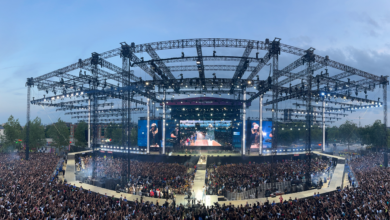
Spearheaded by the outspoken Member of Parliament, Kwame Asare Obeng, popularly known as Kwame A-Plus, the four-day Gomoa Easter Festival projected an attendance of over 20,000 people.
With headline sponsorship from Shatta Wale’s company, and performances from showbiz entertainers, Sarkodie and KK Fosu, the event signalled the elevated stage of Easter now as a big business.
“The main idea is to boost the economy of our area.
If you consider the impact Easter has had on Kwahu, it’s significant,” A-Plus told the media.
His constituency is home to the biggest fish farm in West Africa, and the MP believed Easter provided the perfect platform to market it.
The Brand Gold Rush
Corporate Ghana took note. From beverage companies to telecom companies and banks, brands fought for visibility at these gatherings, recognising that Easter had become the single biggest concentration of disposable income and consumer attention outside of Christmas.
In Accra, Puom Music harnessed the Easter Monday energy for a pool party at the Odjidja Royal Palace in Kwabenya, rebranding it as the “Ghetto Youth Connect Initiative” to support street talent, with artistes like Ras Kuuku and Yaa Pono headlining.
Even Parliament acknowledged the economic weight of the shift.
The Member of Parliament for Mpraeso, Davis Ansah Opoku, recently described the Kwahu Easter festivities as a “national tourism asset” and a “vital source of income for thousands”.
His appeal was not for more church services, but for better roads to sustain the tourist influx.
Vodza Regatta, Anlo Heritage extravaganza
In the southernmost part of the country, the Vodza Regatta, now in its fifth edition, and the maiden Anlo Extravaganza and Heritage Festival 2026, did not disappoint.
The regatta at Vodza assembled local fisherfolk to race amidst a near street jam, which came along with sales of local cuisines and beverages.
The Anlo Extravaganza and Heritage Festival successfully organised two main events, the Miss and Mr Anlo Tourism Ambassadors and the Easter Marathon, named after the legendary long distance runner, Godwin Atsu Adukpo, now a customs officer.
Blending sports, culture and community pride, the race evolved into one of the Volta Region’s flagship events, drawing growing national attention and reinforcing the area’s reputation as a fertile ground for long-distance running.
Beyond the competition, it carried a deeper purpose to celebrate and sustain the Volta Region’s proud tradition of producing elite distance runners while unearthing the next generation of stars.
The tourism ambassador’s pageant crowned three pretty and smart young ladies and a gentleman to promote the rich tourist potential of the Anlo area.
The Vice-President, Professor Naana Jane Opoku-Agyemang, used the occasion to join the chiefs and people of some communities to observe festivals which are usually geared towards development.
She was given a rousing welcome at Sokpoe in the South Tongu District during the grand durbar of the Tortsogbeza Festival last Saturday.
The colourful event brought together traditional authorities, the Member of Parliament (MP) for South Tongu, Maxwell Kwame Lukutor; the District Chief Executive, Victoria Dzeklo; Torgbega Kadzi Zogah II, chiefs and elders of Sokpoe, among others.
In his address, the MP, after welcoming the Vice-President, highlighted critical development challenges confronting the district, chief among which are the persistent water crisis spanning decades, and the deplorable state of key road networks, particularly the Gladisco–Agave Afedume stretch.
Mr Lukutor expressed optimism that the pressing concerns would receive the needed attention under the leadership of John Dramani Mahama.
Crisis of Faith?
Amidst the clinking of glasses and the roar of paragliding engines, however, a quiet unease brewed within the clergy.
A Minister of the Evangelical Presbyterian Church, Rev. Bright Mawuena Nfodjoh, issued a warning, stating that the sacred period was “gradually being turned into a season of heightened social activity”.
In a pastoral letter, Rev. Nfodjoh lamented that Good Friday, a day for mourning the crucifixion of Christ, was now used for hiking, asafo drumming and jamborees.
“Where the meaning of Easter is not deeply taught, experienced and embodied, it becomes vulnerable to cultural redefinition,” he said.
He further blamed the Church for contributing to its own marginalisation, insisting that “places of worship lost their distinctiveness and became indistinguishable from entertainment centres”.
President’s presence
Yet, even the highest office of the land reflected the duality of the season.
President Mahama attended a Good Friday Miracle Service at the Black Star Square in Accra, where he urged Ghanaians to embrace sacrifice and unity.
In a lighter moment captured on video that went viral, the President asked his Aide-de-Camp to sit down, stating, “I’m very safe here” among the congregation.
But the President’s spiritual counsel competed for airtime with the reality that for most Ghanaians, the long weekend was no longer about the empty tomb; it was about travel, leisure and consumption.
As Ghana’s economy seeks to diversify into tourism, the “secularisation” of Easter presents a delicate balancing act: how to boost domestic tourism and local enterprise without completely severing the cord that ties the nation’s most popular holiday to its Christian soul.