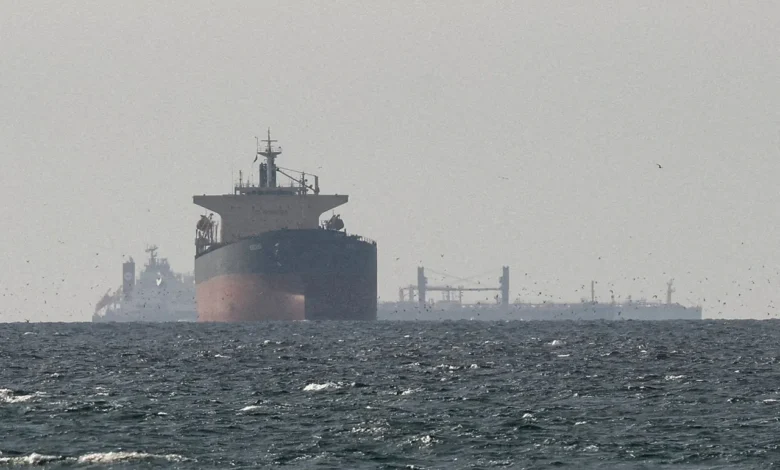
Iran tightens grip on Strait of Hormuz as US moves forces and ceasefire talks stall
Tehran is accused of running a 'de facto toll booth' in the vital oil corridor while Washington deploys troops to the region.
Iran and the United States hardened their positions as diplomacy aimed at reaching a ceasefire in the war appeared to be faltering on Thursday.
Tehran moved to formalise its control over the crucial Strait of Hormuz as Washington prepared for the arrival of combat forces that could be used on the ground in the Islamic Republic.
Industry experts described Iran as instituting a “de facto ‘toll booth’ regime” with some ships paying in Chinese yuan to pass through the strait, through which 20 percent of all oil and natural gas traded typically passes in peacetime.
Meanwhile, a strike group anchored by the amphibious assault ship USS Tripoli drew closer to the Mideast with some 2,500 Marines, and at least 1,000 paratroopers from the 82nd Airborne have been ordered to the region.
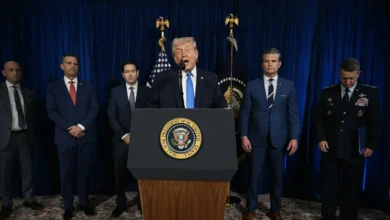
The US troop movements don’t guarantee US President Donald Trump will try to use force to compel Iran to open the strait and halt its attacks on Gulf Arab states hosting US military and financial assets.
Trump previously deployed a large force in the Caribbean before the American military abducted former Venezuelan leader Nicolás Maduro in January, though in the current situation the US is seen as focused on possibly seizing Iran’s oil terminal at Kharg Island or other sites near the strait.
US Navy Adm Brad Cooper, who commands the American military in the region, said that his forces have hit more than 10,000 targets since Israel and the US started the war on February 28, destroying 92 percent of Iran’s largest ships and more than two-thirds of the country’s missile, drone and naval production facilities.
“We’re not done yet,” said Cooper, who heads the US Central Command, in a video message. “We are on a path to completely eliminate Iran’s wider military apparatus.”
Iran seen as operating Strait of Hormuz as ‘de facto toll booth’
With its stranglehold on traffic through the Strait of Hormuz, which leads from the Gulf towards the open ocean, Iran has been blocking ships connected to supporting the US and Israeli war effort, but letting through a trickle of others with a “de facto ‘toll booth’ regime,” Lloyd’s List Intelligence said in a new analysis.
The shipping intelligence firm described vessels having to provide manifests, crew details and their destination to Iran’s paramilitary Revolutionary Guard for sanctions screening, cargo alignment checks that currently prioritises oil over all other commodities, and for what is described as ‘geopolitical vetting,’” Lloyd’s List said.
“While not all ships are paying a direct toll, at least two vessels have and the payment is settled in yuan,” Lloyd’s List said, referring to China’s national currency.
Iran has not directly explained the process for ships to go through the strait, though a foreign ministry spokesperson appeared to acknowledge Tehran was receiving payments for some ships in an interview this week.
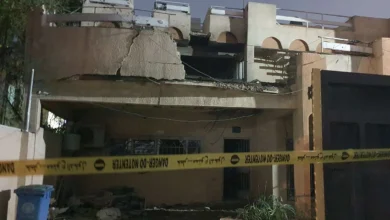
The US-Israeli offensive on Iran and Iran’s grip on the strait and relentless attacks on Gulf regional energy infrastructure has sent oil prices skyrocketing, and growing concerns of a global energy crisis.
Brent crude, the international standard, traded at US$104 early on Thursday, up more than 40 percent from the day the war started.
“To make it crystal clear, this war is a catastrophe for world’s economies,” German Defence Minister Boris Pistorius told reporters in Canberra, after meeting with his Australian counterpart in the capital.
US maintains negotiations are ongoing but Iran says there are no talks
Using Pakistan as an intermediary, Washington has delivered Iran a 15-point proposal to bring about a ceasefire, which includes the reopening of the Strait of Hormuz.