In very short order after Kyiv restored oil deliveries to Russian-oil-dependent Slovakia and Hungary via the Druzhba pipeline, Ukrainian drones on Thursday attacked a key node of the Druzhba oil transportation network upstream in Russia and set it on fire.
Fires ignited by the Ukrainian air strike threatened the Druzhba system’s just-restored return to full capacity for deliveries to downstream customers, but by midday on Thursday the degree of damage caused by effective hits to a key Druzhba pumping facility near the Russian city Nizhny Novgorod was not clear.
The attack struck the Gorky oil refinery near the village of Meshikha about 47 kilometers (29 miles) south of Nizhny Novgorod in the early hours of the morning.
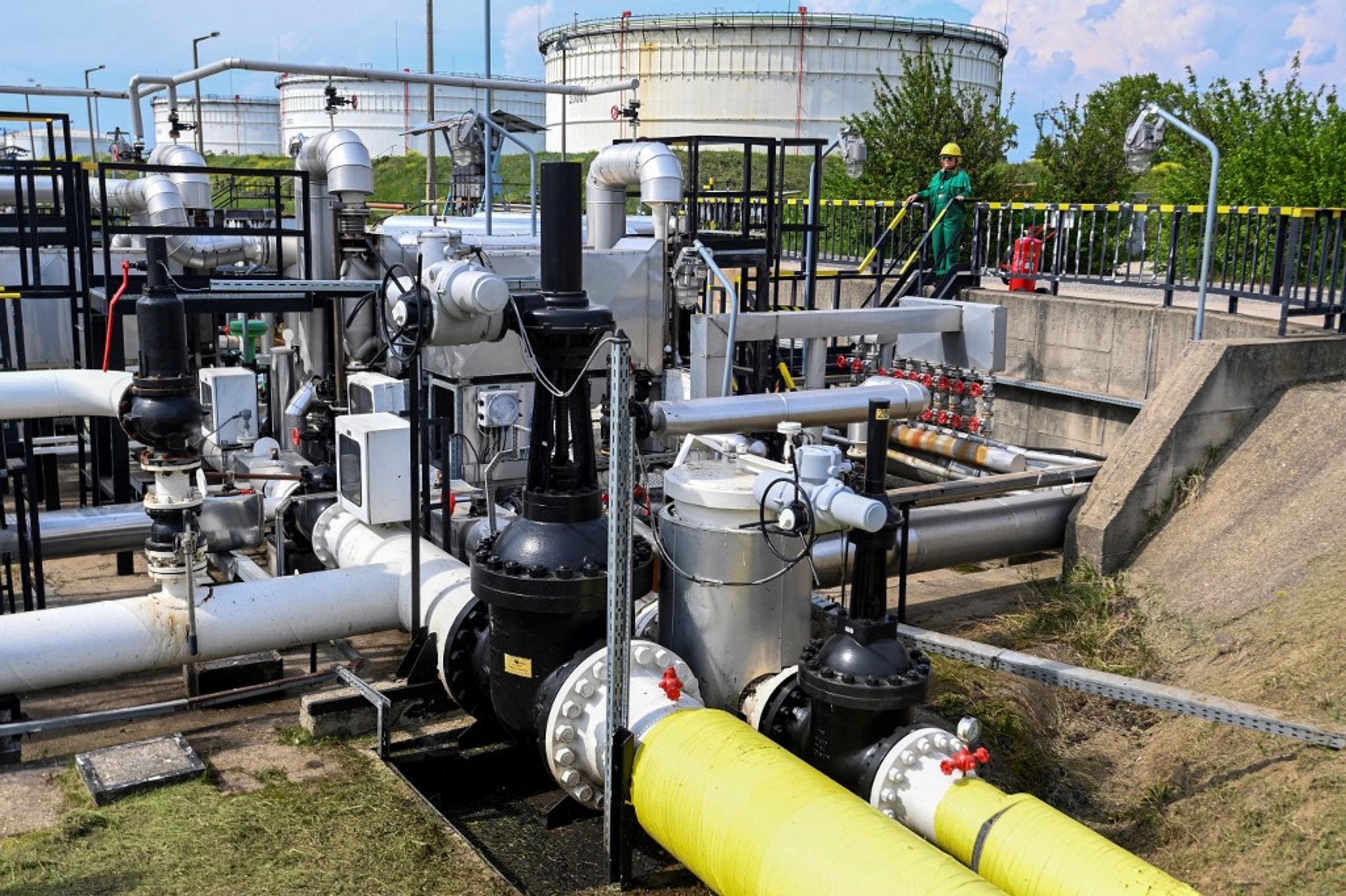
The Transneft-owned Gorky facility is a critical pumping way station and fuel storage site for Druzhba-transported product moving from central Russia to Europe via Belarus.
Nizhny Novgorod regional civilian air defense networks announced an air raid warning shortly before midnight April 22-23 and local air defenses went active at 3 a.m. Moscow time.
A no-fly order went into effect at the same time, shutting down civilian airports.
An all clear called at 6 a.m. A Russian defense ministry statement said that nation-wide air defense forces had shot down 154 Ukrainian drones over 8 other Russian regions and the occupied Ukrainian territory Crimea, along with engagements over Nizhny Novgorod.
The airport lockdown was, however, still in effect by mid-morning.
The night battle between Ukrainian robot aircraft and Russian air defenses around Nizhny Novgorod Oblast, and the strikes setting the Gorky refinery on fire, took place about 12 hours after Hungary’s main oil importer MOL announced Druzhba oil deliveries from Russia had resumed after a halt of more than 80 days, according to Ukrainian claims because Russia had hit Druzhba infrastructure in Ukraine.
The Moscow-loyal A+Fakt Nizhny Novgorod on Thursday morning reported the Ukrainian drone attack had been “repelled” and published images of what it called debris of a destroyed Ukrainian aircraft.
There were no official statements regarding quantity of Ukrainian drones attacking the plant or numbers of effective hits.
Neither military nor official sources reported casualties.
Social media imagery and reports pointed toward at least one and possibly up to three major fires actively burning at the Transneft facility by midday Thursday.
Content recorded by drivers and residents in Nizhny Novgorod region confirmed major fires burning by mid-morning with some flames reaching 50 meters (164 feet) into the sky, spewing thick, black smoke that settled low on the horizon.
The independent Russian news agency ASTRA reported that one of four fuel reservoirs at the site had been totally destroyed, along with other damage whose extent site engineers had not yet determined.
The NASA-run worldwide fire watch network FIRMS showed an active fire in progress at midday on Thursday.
The Ukrainian attack against the Gorky refinery-pump station took place at a distance of about 800 kilometers (500 miles) from probable launch sites in Ukraine.
Overnight aircraft from Ukraine’s Unmanned Systems Forces (USF) also attacked and set afire the Novokuibyshevsk oil refinery and fuel storage base in Russia’s upper Volga Samara region.
In Russian-occupied territory Ukrainian drones set ablaze a fuel storage base in the city Feodosia, a power substation in the city Melitopol, and a Russian Black Sea shore-side troop base in the southern Kherson region.
A statement from the Samara region governor’s office said that “falling debris” had killed one person in the Novokuibyshevsk district and injured others.
Civilians should remain inside and rely on government statements and not social media content for information about the attacks, the official announcement said.
According to Kyiv Post counts, USF aircraft have carried out about 550 strikes against Russian oil refineries, pumping stations and tanker loading ports since launching a bombardment campaign targeting Russian energy infrastructure in late July 2025.
Most attacks have hit medium-range targets between 300-1,000 kilometers (186-621 miles) from launch sites, although a few Ukrainian strike packages flown to western Siberia and on the Caspian Sea have travelled through 1,900-2,000 kilometers (about 1,200 miles) of Russian air space before striking targets.
The Soviet-era Druzhba pipeline carries on average 50-70 million tons of Russian oil to European consumers annually via pipelines crossing Belarus and Ukraine.
The southern branch of the Druzhba network, running through western Ukraine and returned to service on Tuesday, had been off-line since Jan. 27.
Ukrainian President Volodymyr Zelensky on Monday announced that repairs to damage caused by Russian air strikes to Druzhba pipeline facilities inside Ukraine had been completed and Druzhba-carried oil deliveries to Slovakia and Hungary had been renewed.
Hungary’s energy transportation company MOL, the manager of Russian oil deliveries via the Druzhba system to both Hungary and Slovakia, confirmed on Tuesday the line was refilling with oil and that flow should return to normal by Wednesday.
Outgoing Hungarian Prime Viktor Orbán had accused Ukraine and Zelensky of faking the Russian damage to Druzhba in January in order, he claimed, to threaten Hungary’s energy security and undermine his chances for re-election.
Orbán while in office strongly opposed EU support to Ukraine and vetoed a key €90 billion ($105 billion) military assistance loan package to Ukraine, arguing Ukraine shouldn’t fight Russia and should accept Russian capitulation terms instead. Zelensky has denied Ukrainian complicity in damaging Druzhba infrastructure on Ukrainian territory and blamed Russia for the Druzhba stoppage.
Slovak Prime Minister Robert Fico in comments to reporters in Bratislava on Wednesday said that Ukraine’s “repair” of its section of the Druzhba pipeline was directly linked Orbán’s election loss and the declaration by his likely replacement, pro-European politician Péter Magyar, that Hungary would reverse its stance on EU loan assistance to Ukraine.
Fico in comments published on his personal Facebook page said that trust between Bratislava and Kyiv was poor and expressed concern that, if Ukraine actually got its loan money, oil supplied by Druzhba to Europe could be halted again.
Located deep inside Russia’s upper Volga region, the Gorky oil refinery in Nizhny Novgorod Oblast is upstream of both a northern branch of the Druzhba pipeline bypassing Ukraine and running through Belarus to Poland and Germany, and a southern branch running through west Ukraine to connect with Slovakia and Hungary. Both countries receive more than 90 percent of their crude oil by Druzhba, from Russia.