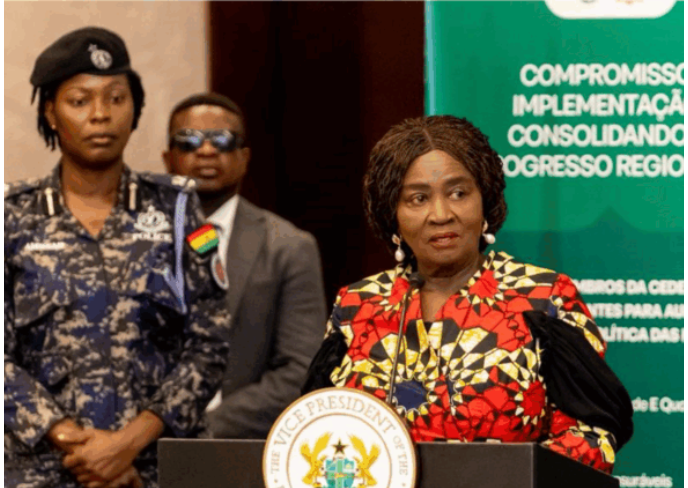
During the high-profile closing of the ECOWAS Regional Consultation in Accra, Ghana’s Vice President, Professor Jane Naana Opoku-Agyemang, issued a stirring call to action that resonated across the sub-region. She asserted that the future of West African development hinges entirely on the active and meaningful inclusion of women and youth in political leadership.
In a sobering warning, she cautioned that the persistent exclusion of these vital groups from decision-making processes would not only stifle progress but fundamentally undermine the stability and democratic health of the entire sub-region. While the Vice President acknowledged the foundational work already established by the ECOWAS Gender Policy and the ECOWAS Youth Policy, she was candid about the current reality where a persistent gap remains between policy and practice. Across many member states, women and young people continue to be significantly underrepresented in the halls of power, a trend she argues must be reversed to ensure regional success.
Professor Opoku-Agyemang emphasized that the future of West Africa depends on the collective ability to harness the talents and leadership of all its people rather than relying on a select few. To demonstrate that such a change is possible, she highlighted Ghana’s recent domestic milestones as a blueprint for the region. Central to this is the Affirmative Action Act, a landmark piece of legislation designed to dismantle the barriers preventing women from entering public life. Since its enactment, Ghana has seen a tangible shift in its political landscape, with more women appointed to critical roles across the executive, judiciary, parliament, and local government. Furthermore, she pointed to the government’s strategic investments in youth through the Ministry of Youth and Development and the National Youth Authority. By creating platforms for civic education, policy dialogue, and engagement in local governance, Ghana is actively moving beyond token participation and ensuring that young people are seen as key architects of governance.
Adding a regional institutional perspective to the discussion, Madam Damtien Tchintchibidja, Vice-President of the ECOWAS Commission, shifted the focus toward long-term implementation and accountability. She noted that the era of simply drafting vision statements is over and that the key challenge now is the need to translate these long-standing commitments into practical and institutionalized action. To address this, the Commission has launched the “Legacy Project,” an initiative that coincides with the bloc’s 50th anniversary. This transformative project aims to consolidate democratic gains and ensure equal political opportunities for all by providing member states with advisory support, peer-learning platforms, and robust monitoring systems. A major pillar of this project is the development of a model law designed to guide regional legal reforms and strengthen the participation of women and youth by the year 2035.
The consultation, which brought together regional stakeholders to review commitments within the ECOWAS framework, concluded with a powerful call for synergy and national will. Dr. Isata Mahoi, Chairperson of ECOWAS Ministers Responsible for Gender, reminded the audience that the success of the Legacy Project depends on the creation of strong national action plans designed to remove deep-seated structural barriers. This sentiment was echoed by Ghana’s Minister of Gender, Children and Social Protection, Dr. Agnes Naa Momo Lartey, who urged all partners and member states to move past political rhetoric. She emphasized that the goal is to make inclusive leadership a practical reality within political institutions so that West Africa can build a future where governance is truly representative and opportunity is accessible to all. Through this unified approach, the region aims to transform its political identity and ensure that its leadership reflects the diverse population it serves.
DISCLAIMER: The Views, Comments, Opinions, Contributions and Statements made by Readers and Contributors on this platform do not necessarily represent the views or policy of FED Kastle Multimedia.
For more news, entertainment and education, visit our website.
||
Source: myjoyonline