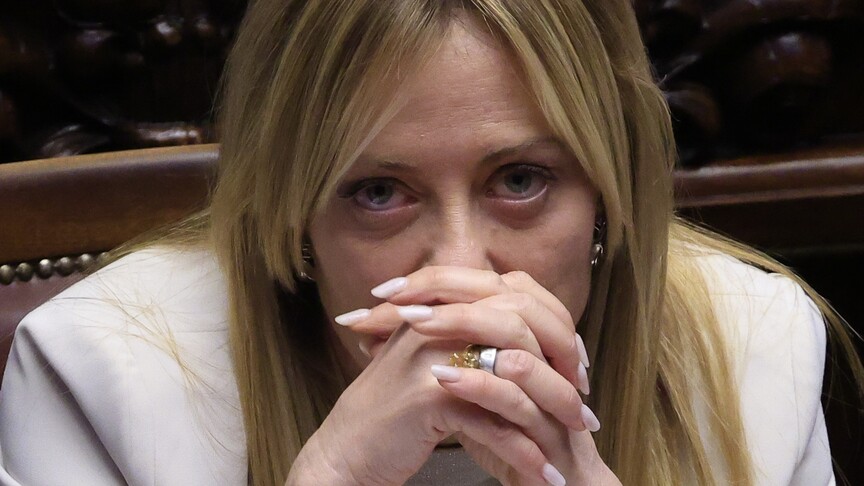
Italy’s Prime Minister Giorgia Meloni on Thursday rejected accusations that she is overly aligned with US President Donald Trump, insisting her country’s foreign policy remains consistent with its long-standing Western alliances.
According to a report by ANSA, Meloni told lawmakers in Rome: “Italy’s international positioning wasn’t invented by this government, but has remained the same for about 80 years.”
She dismissed criticism suggesting she must choose between the US and Europe, calling it a “now-cliched refrain.”
Referring to opposition leader Elly Schlein of the center-left Democratic Party, Meloni said her government was united in its approach to transatlantic relations.
“I would say, borrowing a phrase dear to Elly Schlein, that we are stubbornly united,” she said. “We are ‘stubbornly Western,’ because only if the West is united can it be a force capable of expressing its voice on the world stage.”
Concerns over Strait of Hormuz
Meloni also addressed tensions involving Iran and the Strait of Hormuz, a key global shipping route, warning that any restrictions or additional charges on transit could have serious economic consequences.
“Full restoration of freedom of movement in the Strait of Hormuz is needed, and it must not be subject to any restrictions,” she said.
Meloni added that allowing Iran to impose extra duties could lead to “unpredictable economic consequences.”
EU economic response considered
Looking ahead, Meloni suggested that if the crisis with Iran escalates further, the EU may need to consider emergency economic measures.
She said this could include suspending the bloc’s Stability and Growth Pact, similar to steps taken during the COVID-19 pandemic.
“If there is a new escalation… it should not be taboo to consider the possible temporary suspension of the Stability and Growth Pact,” she said, stressing that any move would apply across all member states rather than benefiting individual countries.
The pact ensures that member states maintain sound public finances and coordinate fiscal policies to support the stability of the euro.