Iran and US exchange air strikes threatening tenuous ceasefire
A US official said the American military shot down four Iranian attack drones and struck a ground control station in the port city of Bandar Abbas.
Iran’s Revolutionary Guard said on Thursday it targeted a US airbase after the US military carried out what a Washington official said were “defensive strikes” targeting an Iranian drone operation near the Strait of Hormuz, hours after President Donald Trump rejected a report he was close to a compromise deal with Tehran.
The escalation in hostilities highlighted threats to the tenuous ceasefire between the US and Iran that took effect in early April, dampening hopes for a peace deal and sending oil prices surging again.
The US official, who requested anonymity to speak candidly about military operations, told Reuters the military shot down four Iranian attack drones and struck a ground control station in the port city of Bandar Abbas that was about to launch a fifth drone.
“These actions were measured, purely defensive and intended to maintain the ceasefire,” the official said.
The Islamic Revolutionary Guard Corps said it targeted a US base in response to what it described as an early morning US attack near Bandar Abbas airport, Tasnim news agency reported.
The IRGC said they targeted the US airbase from which the attack on the control station near Bandar Abbas was launched.
Kuwait – which hosts a large US base – said it was responding to missile and drone attacks without saying where the attacks were coming from.
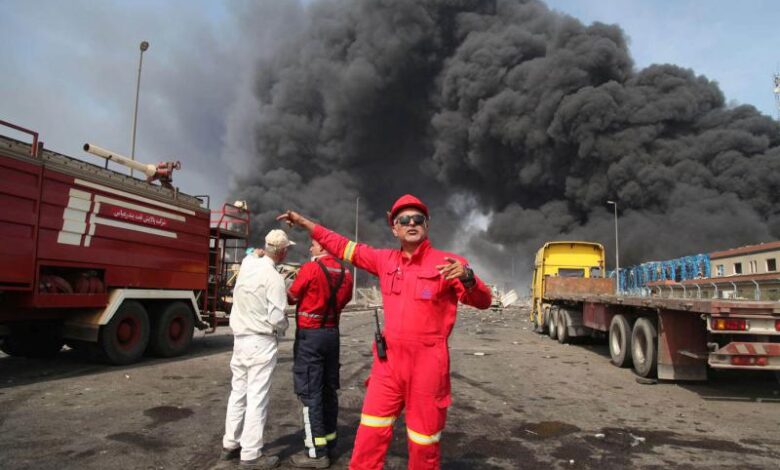
Three explosions were heard east of the Iranian port city of Bandar Abbas at around 1:30 am local time, Iranian media reported early on Thursday, adding that air defences were activated for several minutes and that authorities were following up to determine the origin of the sounds.
Oil prices, having fallen more than 5% on Wednesday, rebounded after reports of the escalation in hostilities. US crude futures gained more than 3%, while stocks fell and the dollar rose.
At a cabinet meeting attended by media on Wednesday, Trump dismissed an Iranian state TV report that it had obtained an unofficial draft of an agreement to restore commercial shipping through the strait to prewar levels within a month, with Iran and Oman jointly managing traffic.
Trump said no single country would have control over the waterway, and appeared to threaten Oman, a country with which the US has decades-long military and economic ties.
“Nobody’s going to control (the strait),” Trump said.
“It’s international waters and Oman will behave just like everybody else or we’ll have to blow them up.
They understand that, they’ll be fine.”
Tehran condemns the US attack on areas in Iran’s Bandar Abbas, the country’s Foreign Ministry spokesperson Esmaeil Baghaei said in a statement on Thursday.
Iran also expressed solidarity with Oman after “U.S. officials’ threats”, Baghaei added.
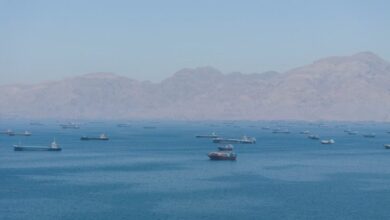
Iran’s Islamic Revolutionary Guards Navy said on Wednesday that 23 ships including oil tankers, container ships and other commercial vessels passed through Hormuz with its permission in the previous 24 hours, a fraction of the daily 125 to 140 vessels before the conflict.
Trump added that he was not yet satisfied on a deal with Iran and the US was not discussing easing sanctions on the country.
Trump also said on Wednesday he was unconcerned about the political fallout of an extended conflict with Iran, and that Iranian leaders had miscalculated if they thought the November midterm elections would force him into a deal.
“They thought they were going to outwait me,” Trump said at a White House cabinet meeting, referring to Iran’s leadership.
“You know, ‘We’ll outwait him.
He’s got the midterms.’ I don’t care about the midterms.”
The president had initially said the war would last four to six weeks, but it is now approaching its fourth month. At times, he has suggested the conflict could end within days only to later suggest it could go on for some time.
Trump made the comments on Wednesday as he discussed how to end the conflict. His dismissal of midterm pressure could add to concerns among Republican allies already uneasy with earlier remarks downplaying the economic impact of the war on Americans.
Growing voter disquiet about high prices, especially for gasoline, has added to political pressure on Trump’s Republican Party, which is widely expected to struggle to keep control of the House of Representatives and possibly the Senate.
The Iranian TV report of a framework deal said the United States would also lift its blockade of Iranian ports and withdraw military forces from Iran’s vicinity.
Ebrahim Azizi, hawkish head of the Iranian parliament’s national security committee, said Trump’s “rhetoric” would not force Iran to back away from its demands to enrich uranium, wield authority over the strait and see sanctions against it lifted.
“It is obvious Trump, seeking a way out of this strategic deadlock, alternates between issuing threats and appealing for an agreement,” Azizi said in a post on X.
The strait, which handled a fifth of the world’s oil and liquefied natural gas traffic before the war, the dismantling of Iran’s nuclear capacity and ongoing sanctions are the sticking points in talks seeking to end the three-month conflict.
The waterway is covered by international law that guarantees foreign vessels the right to pass through.
The US Treasury Department added the Persian Gulf Strait Authority, the Iranian body set up to manage passage through the strait, to a list of sanctioned people and entities seen as posing threats to US national security.
Iranian state TV said the draft deal would also have the US withdraw military forces from the immediate vicinity, though it said the issue of US troops in the region needed further discussion.
The White House dismissed the report as a “complete fabrication.” Tehran did not comment.
The US military has some 15,000 troops enforcing a blockade of Iran and thousands of additional forces at bases throughout the region.
US naval vessels, some with thousands of sailors and Marines aboard, regularly transit the region, stopping in ports including in Oman.
The Iranian TV report on the draft agreement did not mention Iran’s nuclear programme, which the US wants disbanded.
Iranian sources have said talks on the nuclear issue will come in a second round of negotiations – something that may not be acceptable to some of Trump’s closest supporters.
Iran says its nuclear programme is for peaceful purposes only.
“The bottom line is Iran’s never going to have a nuclear weapon,” US Secretary of State Marco Rubio said at the cabinet meeting.