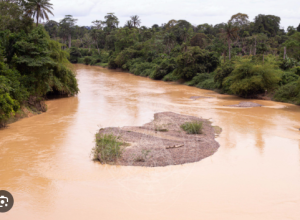
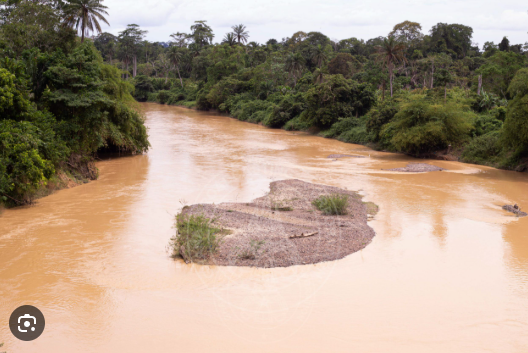
The river, which was once known for its clean state, has gradually turned yellowish, an apparent sign of the extent of pollution and the possible consequences for water treatment and supply.
This came to light when the Executive Secretary of the Public Utilities Regulatory Commission (PURC), Dr Shafic Suleman, visited the Abesim Water Treatment Plant, which draws raw water from the Tano River and supplies the Sunyani Municipality.
Dr Suleman said increasing galamsey activities upstream of the river were affecting the quality of raw water supplied to the plant.
He said turbidity levels of water entering the plant had remained consistently high over the past three months, raising concerns about the possible impact of mining-related pollution on water treatment and supply.
Although the levels had not yet reached the threshold requiring the use of polymers, he said further deterioration could increase the quantity of chemicals needed to treat the water, and consequently the operating costs for Ghana Water Ltd (GWL).
Dr Suleman warned that the situation could also affect the volume of raw water available for treatment, and worsen existing water supply challenges.
He said galamsey in the regions was relatively limited, but activities upstream in neighbouring areas, particularly parts of the Ashanti Region, could have serious consequences for communities and water facilities downstream.
Dr Suleman appealed to the regional ministers for Bono, Ahafo and Ashanti to work together to address the threat before the situation deteriorates to levels experienced in parts of the Western and Eastern regions.
He called on chiefs, district assemblies, opinion leaders, the media, security agencies and environmental institutions to support efforts to protect the river.
Dr Suleman said the PURC would draw the attention of relevant institutions, including the GWL, National Security and other environmental authorities, to the concerns, and seek their collaboration to address the problem.
On water supply challenges in the region, Dr Suleman said the plant was in good condition and operating at about 90 per cent of its installed capacity.
He, however, said the level of production was inadequate to meet demand, making the revival of the stalled Sunyani Water Expansion Project critical to increase water production and improve distribution to communities.
He appealed to the government, particularly the Ministry of Finance and the management of the GWL, to prioritise the project and to facilitate the return of the contractor to the site.
Dr Suleman said the PURC’s Bono Regional Office had received about 1,300 consumer complaints since the beginning of the year, with approximately 91 per cent resolved.
He said the commission had also facilitated the replacement of 33 faulty or overloaded electricity transformers by the Northern Electricity Distribution Company (NEDCo), benefiting more than 3,000 people in affected communities.
In addition, he said, 381 defective electricity poles had been replaced in the region, while about 9,802 electricity meters had been distributed to consumers.
The Brong Ahafo Regional Chief Manager of the GWL, Theophilus T. Collins, said the Abesim facility was the main treatment plant supplying the municipality and its environs.
He acknowledged that challenges with raw water quality had increased the use of treatment chemicals and operating costs at the facility, putting additional pressure on the company’s resources.
He, however, gave an assurance that water produced by the plant continued to meet the required quality standards, including those of the Ghana Standards Authority, PURC and the World Health Organisation.
Mr Collins emphasised that the quality of water supplied to consumers had not been compromised.