South Korea scrambled fighter jets and briefly ordered residents of an island near Japan to seek shelter on November 24, after the Russian military aircraft approached its territorial airspace.
The Gaze reports this, referring to Yonhap.
According to the country’s Joint Chiefs of Staff, the aircraft entered South Korea’s Air Defense Identification Zone (KADIZ) over waters between the Korean Peninsula and Japan.
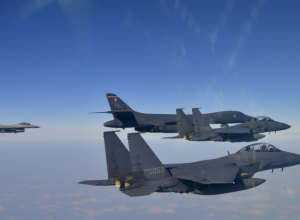
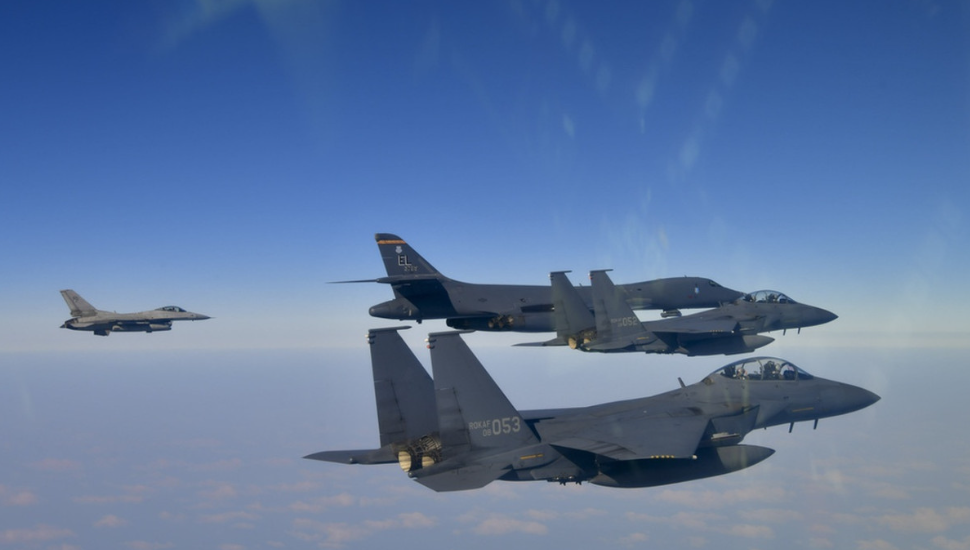
As the Russian planes approached Ulleungdo Island, South Korean authorities warned residents of a possible airspace violation and deployed F-15K fighter jets to intercept them.
The Associated Press reported that the Ministry of the Interior and Safety instructed island residents to take shelter underground at 7:52 a.m. local time.
The alert was lifted just three minutes later.
It was the first time South Korea had issued an air raid warning in response to a potential violation of its airspace by Russian military aircraft.
Following the deployment of South Korean F-15K jets, the Russian aircraft changed course towards Japan before leaving the identification zone and heading north.
The planes spent approximately 20 minutes inside the KADIZ.
Officials confirmed that the Russian aircraft never entered South Korea’s sovereign airspace.
Military sources cited by Yonhap, however, suggested that the aircraft might have crossed the country’s territorial boundary if South Korean fighters had not responded.
An air defense identification zone extends beyond a country’s sovereign airspace.
It allows military authorities to identify and monitor approaching foreign aircraft.
The encounter came just eight days after another episode involving Russian military aviation near South Korea and Japan.
On November 16, both countries deployed fighter jets in response to Russian aircraft operating near their territories.
Japanese authorities subsequently reported that two Russian military planes may have entered Japan’s sovereign airspace near Okinoshima Island.
As The Gaze informed earlier, South Korea has expressed its willingness to take in North Korean soldiers captured during the Russian-Ukrainian war, provided they voluntarily choose to resettle there.
Meanwhile, Kyiv and Seoul have agreed to establish a joint task force to coordinate efforts to rebuild and modernise Ukraine’s infrastructure.