The UN’s top court ruled Thursday that Myanmar committed genocide against Rohingya Muslims in 2017, marking the first time it has held a state responsible for genocide.
The International Court of Justice (ICJ) found Myanmar responsible for genocide during military operations in northern Rakhine State by a vote of 9-6.
Reading the judgment, International Court of Justice President Judge Yuji Iwasawa said Myanmar “has committed genocide against the Rohingya group in northern Rakhine State, in violation of its obligations under the Convention on the Prevention and Punishment of the Crime of Genocide.”
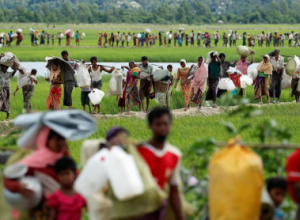
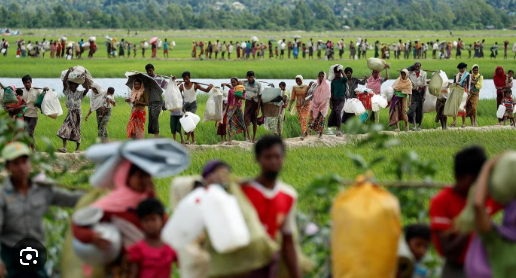
“The court finds that Myanmar’s security forces killed thousands of Rohingya civilians, perpetrated widespread acts of sexual violence, as well as acts of extreme violence against children, and attacked fleeing Rohingya as they sought to flee in large numbers to Bangladesh,” the court said.
The judges found that Myanmar’s security forces committed acts prohibited under the Genocide Convention with “an intent to destroy a substantial part of the Rohingya population of Myanmar.”
The court concluded that the scale and methods of the violence went beyond military necessity and reflected “an intent to destroy a substantial part of the group.”
In a separate 9-6 vote, the court found that Myanmar had violated its obligation to prevent genocide committed by civilians acting alongside its security forces.
It also found that Myanmar had failed to fulfill its obligation to punish genocide.
The court ordered Myanmar to take “immediate and effective steps” to investigate suspected perpetrators and facilitate the “safe, voluntary, and dignified return” of displaced Rohingya.
Myanmar must also restore or replace lost or damaged Rohingya property and provide physical and psychological rehabilitation to those injured, according to the judgment.
The ruling further requires Myanmar to compensate Rohingya victims for damage that cannot be remedied through restitution.
Military justification fails to explain atrocities
The judges examined the systematic nature of the military operations, the targeting of Rohingya civilians and actions threatening the group’s survival.
They concluded that the scale of destruction and civilian casualties could not be explained by Myanmar’s stated objective of combating insurgents.
“The court views casualties and damage, far in excess of what was justified by military necessity, as a factor weighing against the inference that Myanmar’s intent was to carry out counter-insurgency operations,” Iwasawa said.
The court also found that civilian participation alongside security forces “posed a serious risk of genocide, of which the state should normally have been aware.”
It found “no evidence” that Myanmar authorities attempted to discourage civilians from participating in attacks against the Rohingya.
Myanmar ordered to prosecute perpetrators, provide reparations
The court ordered Myanmar to take “immediate and effective steps” to investigate suspected perpetrators and facilitate the “safe, voluntary, and dignified return” of displaced Rohingya.
Myanmar must restore or replace damaged property, provide physical and psychological rehabilitation to victims and compensate them for losses that cannot be remedied through restitution.
The judges also ordered Myanmar to assist in locating missing Rohingya, identifying the remains of those killed and ensuring dignified reburials.
The ruling requires Myanmar to adopt legislation implementing the Genocide Convention and provide guarantees against future violations.
The court cited “long-standing and deeply entrenched hostility towards the Rohingya as a group.”
It gave Myanmar two years to report on restitution measures, while compensation arrangements will be determined in subsequent proceedings.
Court finds Myanmar violated evidence preservation order
The court also found Myanmar had violated its January 2020 order to preserve evidence of alleged crimes.
It cited the construction of a government base on former Rohingya village sites in 2021 and the destruction of remnants of at least five villages in May 2020.
“The court finds convincing evidence” of these actions, Iwasawa said.
Gambia brought the case in November 2019, backed by the 57-member Organization of Islamic Cooperation, after military operations forced more than 700,000 Rohingya to flee to Bangladesh in 2017.
The ICJ ordered Myanmar in January 2020 to prevent genocide and preserve evidence before rejecting its preliminary objections in July 2022.
Judges split on genocide findings, reject incitement claim
The judges ruled 11-4 that Myanmar failed to punish genocide and related prohibited acts.
In separate 14-1 decisions, they found Myanmar had failed to enact legislation implementing the Genocide Convention.
The court ordered investigations and possible prosecutions by 13-2, while a 9-6 ruling required guarantees against future violations.
In three 10-5 decisions, judges ordered restitution and compensation, reserving the determination of compensation amounts for later proceedings.
The court also ruled 11-4 that Myanmar violated its obligation to preserve evidence.
However, by 14-1, it rejected a separate claim concerning direct and public incitement to genocide by private individuals.
“For hate speech to constitute incitement, however, it must involve a call to commit genocide when viewed in context,” the court said.
The judges unanimously rejected Gambia’s remaining submissions.